






Kotlin App Development Company for Native Android Apps
We build, release and look after native Android apps in Kotlin for businesses in the US, UK, Europe and the UAE: Jetpack Compose screens, device features, and the back ends behind them.
- Native Android Apps Kotlin and Jetpack Compose, built for Android phones and tablets.
- Device Features Camera, Bluetooth, location and work that runs in the background.
- Google Play & Support Test tracks, Play Console review, then updates and fixes.
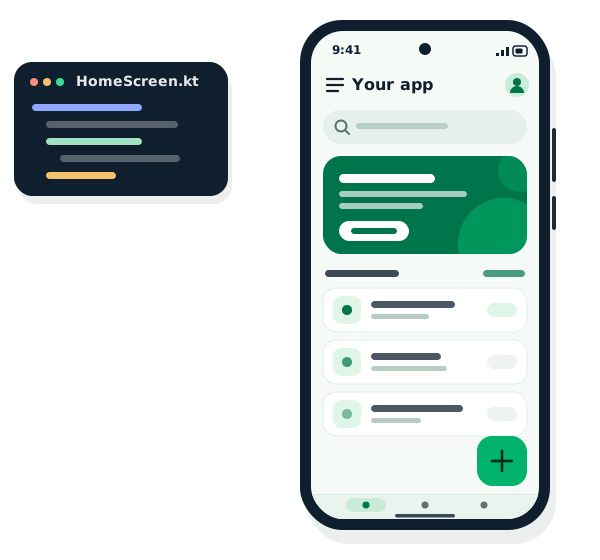
Jetpack ComposeScreens in Kotlin
Internal testBuild on your phone
Ratings and help choosing how to build


What we do
Kotlin development services
What we do with Kotlin, from a new Android app and its back end to Google Play releases and the support behind them.
Book a free Kotlin consultationCommon Android problems we fix
- Crashes or freezes on some phones and not others
- Slow start-up and lists that stutter as you scroll
- Google Play asking for a newer target SDK before the next update
- Background work that drains the battery or stops without warning
- An old Java codebase nobody wants to change
-
A new app for Android phones and tablets, built around the few things your users must be able to do.
-
Android's current UI toolkit, written in Kotlin, with Material Design components and dark mode.
-
Camera and scanning, Bluetooth devices, location, and work that keeps running in the background.
-
Node.js, Laravel or Firebase back ends, or a clean connection to the API you already run.
-
Android apps another team wrote, moved to Kotlin and Compose step by step, with the target SDK kept current.
-
Test tracks, the store listing and Play Console review, then fixes, Android updates and new releases.
Choosing how to build
Native Kotlin, Flutter or React Native?
We build apps all three ways, so we have no reason to push you either way. This is how we help clients choose.
-
Kotlin
Choose native Kotlin when
- The app leans on the device: Bluetooth, sensors, camera, background work
- Android is your main platform, or the only one
- You want new Android features as soon as they ship
- You already have an Android app in Java or Kotlin
-
Flutter
Choose Flutter when
- You need iPhone and Android apps from one team and one codebase
- Your app has its own branded look, with custom screens and motion
- You want both store releases to ship together
-
React Native
Choose React Native when
- Your team already writes React and JavaScript or TypeScript
- You want to share code and people with a React web app
- You need iPhone and Android, and the device features are standard
Need an iPhone app too? Kotlin Multiplatform can share the business logic between the Android and iPhone apps, with the iPhone screens built in Swift; or one Flutter or React Native app covers both. See how we run mobile app development.
Java to Kotlin, XML to Compose
Modernise your app without a rewrite
An older Android app does not have to be thrown away. We move it to Kotlin and Jetpack Compose in small releases, and it stays on Google Play the whole time.
- Java code
- XML layouts
- Old libraries
- Target SDK
- Play policies
-
01
Get it building again
We read the code, get it building on current Android Studio and Gradle, and add crash reporting if it has none.
-
02
Tests around what breaks
Tests on the flows your users rely on most, so every change after this can be checked.
-
03
Kotlin, file by file
Kotlin runs alongside Java in the same app, so the code moves over in small releases instead of one big rewrite.
-
04
Compose, screen by screen
New and changed screens are written in Jetpack Compose and live beside the old XML screens until those are replaced.
How we work
From first call to an app on Google Play
Six steps, the same on every app.

Kotlin development
What we build with Kotlin
The device features that make an app worth building natively, and the parts around them.
-
Camera and scanning
Photo capture, document and barcode scanning, and images compressed on the phone before they upload.
-
Bluetooth and connected devices
Companion apps that find, pair with and read from Bluetooth Low Energy devices, and keep the link alive.
-
Location and maps
Live location, routes and geofences, with the location permission asked for only when it is needed.
-
Apps that work offline
Data stored on the phone with Room and synced when the connection returns, for staff out in the field.
-
Notifications and background work
Push notifications through Firebase Cloud Messaging and scheduled jobs with WorkManager that respect the battery.
-
Widgets, tablets and foldables
Home-screen widgets, and layouts that adapt from a phone to a tablet or a folding screen.
Why Provis
Why work with Provis on Kotlin
Six things you can check before you hire us.
-
24/7 monitoring after launch
Every build comes with monitoring and support once it is live.
-
Test builds before Google Play
You try each release on your own phone before it goes to review.
-
Takeovers start with a review
An Android app another team built gets a code review and tests before we change it.
-
Your code, in your repo
Every change is committed to your own repository, so the app is never locked to us.
-
Honest advice on how to build
We build native, Flutter and React Native apps, so we recommend what fits your app.
-
Hours that overlap yours
We are on IST: 4.5 to 5.5 hours ahead of London, 9.5 to 10.5 ahead of New York.
Integrations
What we connect Android apps to
The back ends, libraries and services we use in Kotlin apps, and the parts we write ourselves.
-
Back endsWhere the app's data lives.
- Node.js
- Laravel
- Firebase
-
Android librariesScreens, data and jobs on the phone.
- Jetpack Compose
- Room
- Retrofit
- Hilt
- WorkManager
-
PaymentsCheckout and subscriptions in the app.
- Google Play Billing
- Razorpay
-
Alerts and crashesPush messages and crash reports.
- Firebase Cloud Messaging
- Firebase Crashlytics
-
Maps and locationWhere your users and drivers are.
- Google Maps SDK
- Fused Location Provider
-
Build and releaseFrom the code to the store.
- Android Studio
- Gradle
- Google Play Console
Speed, security and care
Fast, safe and kept up to date.
An Android app keeps changing after it reaches Google Play: new Android versions, new store rules, new phones and more users. We look after the app and the back end it calls, before launch and after it.
-
Smooth on everyday phones
Start-up and scrolling profiled on real, mid-range devices, with baseline profiles and images sized for phones.
-
Updates without surprises
Android, Kotlin and library updates tried in test builds first, and Google Play's target SDK rules kept current.
-
Crash reports and alerts
Crash and freeze reporting in every release, so a problem is seen and fixed in the next build.
-
Security basics, done
Tokens kept in encrypted storage, API calls over HTTPS, code shrunk and obfuscated, and only the permissions the app needs.
Cost
What does a Kotlin app cost?
Every app is different, so we quote after a short call, not from a price list. Within two working days you get an approach, a rough timeline and a rough cost range. No charge, no commitment.
What changes the price
-
Screens and user types
How many screens and flows, and kinds of user such as customers, staff and admins.
-
Device features
Camera, Bluetooth devices, location, offline data and background work.
-
Back end and API
Whether the app uses an API you already run, or needs a new back end.
-
Integrations
Payments, maps, push notifications, ERPs and CRMs.
-
Android only, or iPhone too
Phones, tablets or both, and whether an iPhone app is needed now or later.
-
Releases and support
Google Play releases, monitoring, updates, fixes and new features once it is live.
FAQ
Kotlin development questions
Short, straight answers.
How much does Kotlin app development cost?
It depends on the screens and kinds of user, the device features, the back end, the integrations and whether you need an iPhone app too. We do not sell fixed packages. After a short call, we send an approach, a rough timeline and a rough cost range within two working days, with no charge and no commitment.
How long does it take to build a native Android app?
An app with a handful of screens on an existing API takes far less time than one with Bluetooth devices, offline sync and a new back end. We give you a realistic timeline after the first call, and you try the app on your own phone through test builds as it is built.
What is Kotlin, and why use it for Android?
Kotlin is a programming language made by JetBrains, and Google's recommended language for Android apps. It is shorter and safer to write than Java, works alongside existing Java code, and is the language of Jetpack Compose, Android's current toolkit for building screens.
Should I choose native Kotlin, Flutter or React Native?
We build all three, so the answer depends on your app. Native Kotlin suits apps that lean on the device, such as Bluetooth, sensors and background work, or apps that are Android first. Flutter suits iPhone and Android apps from one codebase with a branded look; React Native suits teams that already write React. We tell you which fits after the first call.
Can you build the iPhone app as well?
Yes. If both apps can look the same, one Flutter or React Native app covers iPhone and Android and usually costs less. If most of the work is shared business logic, Kotlin Multiplatform lets the Android and iPhone apps share that code while each keeps its own screens. We recommend one after the first call.
Can you publish the app on Google Play?
Yes. We send test builds through Google Play's internal and closed test tracks, prepare the store listing and data safety form, take the app through Play Console review and release it in stages, so a problem reaches few users before it is fixed.
Can you take over an existing Android app written in Java?
Yes. We read the code, get it building again, and add tests around the parts that break most. Kotlin works alongside Java, so we move the app over file by file and screen by screen, releasing as we go, instead of stopping for a full rewrite.
Which back end do you use with a Kotlin app?
Whatever fits the app. We build Node.js and Laravel back ends, use Firebase where it suits, or connect the app to the API you already run. The admin panel your team uses can sit on the same back end.
Who owns the code?
You do. The code goes into your own repository as it is built, and we recommend the app is published under your own Google Play developer account, so it stays yours if you ever change teams.
Do you work with clients outside India?
Yes. Our team is in Jaipur on IST, 4.5 to 5.5 hours ahead of London and 9.5 to 10.5 ahead of New York, and works with clients in the US, the UK, Europe, Australia and the UAE. Our UK company, Provis Global Ltd, is registered in the United Kingdom.
- 1 Project details
- 2 Your details
- 3 Additional info
Tell us about your Android app
This helps us understand your app and prepare a relevant reply.
Prefer to talk directly?
We're on IST: 4.5 to 5.5 hours ahead of London, 9.5 to 10.5 ahead of New York.