







How Provis built AI-assisted client intake for PartnerVine, a legal technology client.
PartnerVine needed a structured way to collect the facts of a legal case and to judge whether it had merit. Provis built an intake question set, a report generated from the answers, and a pipeline that answers questions from the client's own data.
- Intake questions
- Case report
- RAG pipeline


 Client: PartnerVineLegal technology
Three tools that help a legal team assess a case.
- Intake questions
- the same ones every time
- Every client is asked the same questions, so the team gets the same facts each time
- Case report
- written from the answers
- Shows the strengths of a case and how likely it is to succeed, so the team can decide faster
- Answers from your data
- not guesses
- Questions are answered from the client's own information, so the answer rests on real facts
At a glance
- Problem
The business needed a more structured way to collect information about a legal case, and to judge whether the case had merit and was worth pursuing.
- Solution
An intake question set, a report generated from the answers, and a RAG pipeline that answers questions grounded in the client's own data.
- Today
The system is running, with no major changes since the original work.
- Client
- PartnerVine
- Industry
- Legal technology
- Services
- AI integration, AI-assisted client intake
- What Provis built
- An intake question set, a case report generated from the answers, and a retrieval-augmented generation (RAG) pipeline
- Status
- Running, with no major changes since the original work
Client intake had no structure for judging a case.
A legal business starts with what a client tells it. PartnerVine needed a more structured way to collect that information about a case, so that the case could be assessed.
The question behind it was whether a case had merit and was worth pursuing. That meant gathering the facts the same way each time, and turning them into something a person could read and decide on.
How a legal business usually takes in a case
- A new clientcalls or writes in with a problem
- Questionsasked by hand, and different each time
- Notesspread over emails and documents
- A decisionsomeone reads it all and forms a view
A typical flow for businesses like this, not a record of this client.
Questions, a report and answers from the client's own data.
The three problems behind the intake work, and what Provis built for each.
-
Case information was not collected in a structured way
To assess a case, the business needed the same information from each client, in a form it could use.
What Provis builtAn intake question setProvis created a file holding the questions asked during client intake. The answers are what the rest of the system works from.
-
No quick way to judge whether a case had merit
Deciding whether a case was worth pursuing meant reading the whole intake and forming a view by hand.
What Provis builtA report generated from the answersThe answers are turned into a report on the case. It is meant to summarise the case's strengths and to estimate its likelihood of success.
-
Questions about a case need answers from the client's own information
Answers about a case are only useful if they come from what the client has actually provided.
What Provis builtA RAG pipeline over the client's dataA retrieval-augmented generation (RAG) pipeline answers questions grounded in the client's own data, so an answer rests on that data.
Three parts that work together: questions, report and answers.
- Intake questionsThe set of questions asked at client intake, kept in a file
- Case reportGenerated from the answers: the case's strengths and an estimate of its likelihood of success
- RAG pipelineAnswers questions from the client's own data
-
What was built: an intake question set, a case report generated from the answers, and a RAG pipeline.
-
The report: a summary of the case's strengths and an estimate of its likelihood of success.
-
Where it runs: inside the client's portal, so the tools are not visible on the public site.


AI in the system:
Answers that come from the client's own data.
A retrieval-augmented generation (RAG) pipeline looks up the relevant information in the client's data first, then answers from it. The case report uses the same intake answers.
The report is there to help judge whether a case has merit and is worth pursuing.
How Provis builds AI into a productWhat the intake, report and answers look like.
Illustrative screens, designed in PartnerVine's style; the real tool is private. The cases and documents shown are made up. Select one to enlarge it.
-
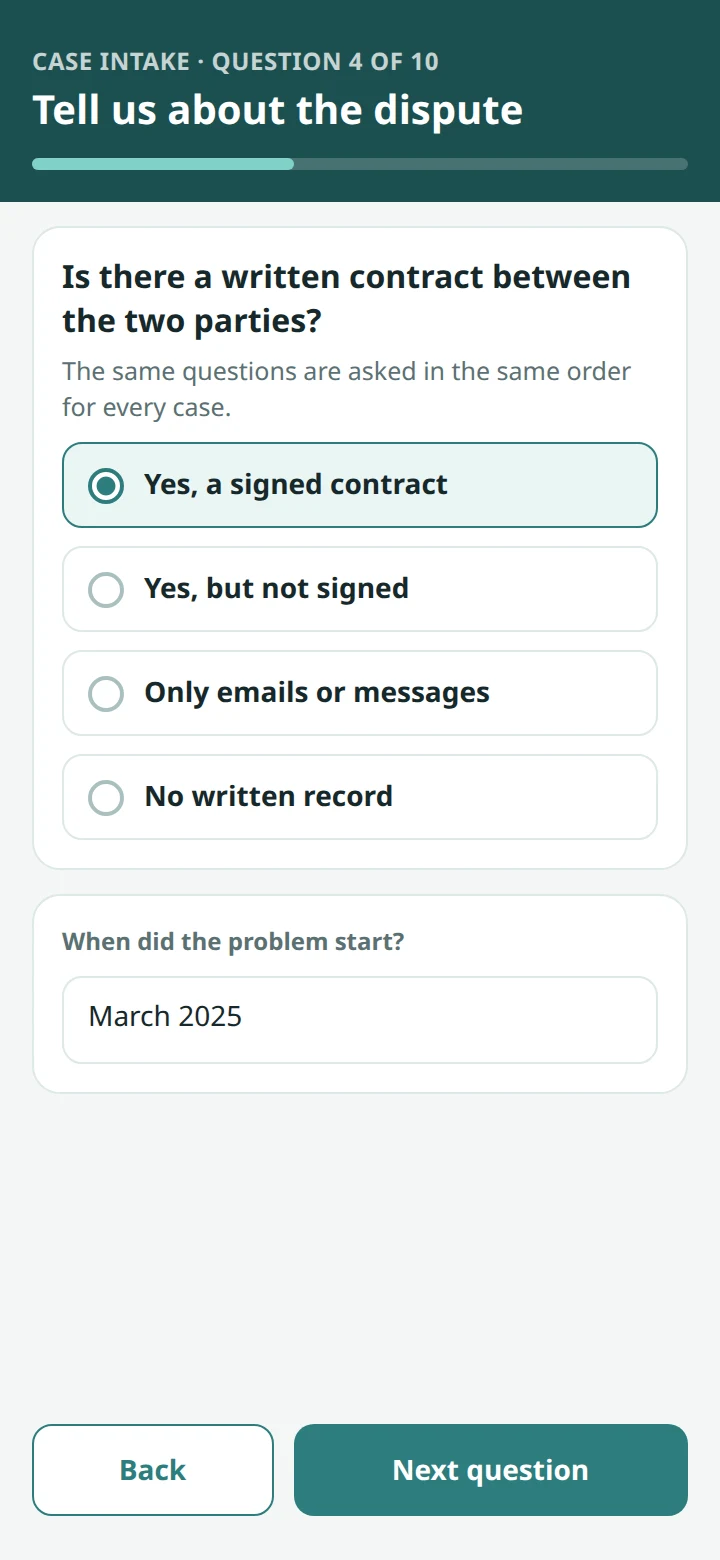
Intake questionsThe same questions every time
-
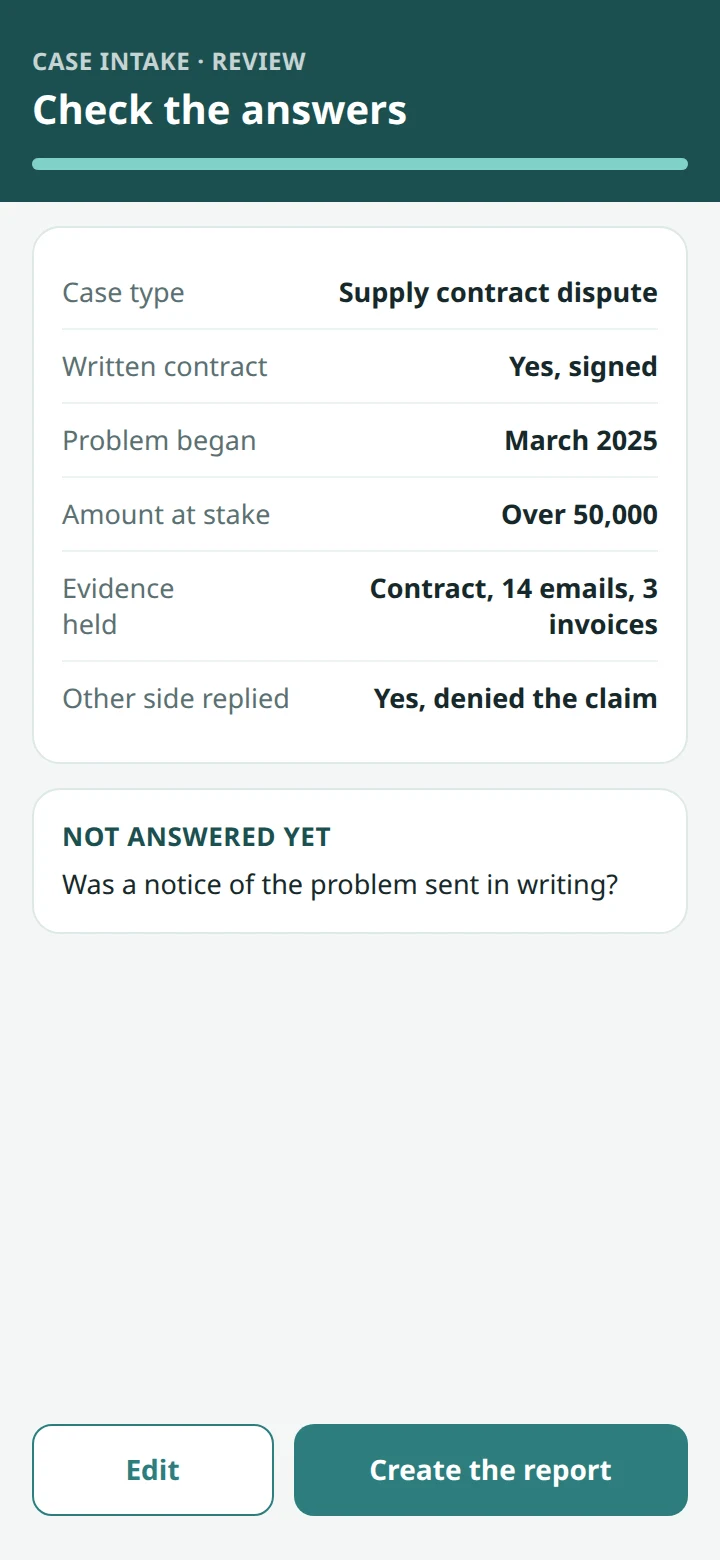
Check the answersAll the facts in one place
-
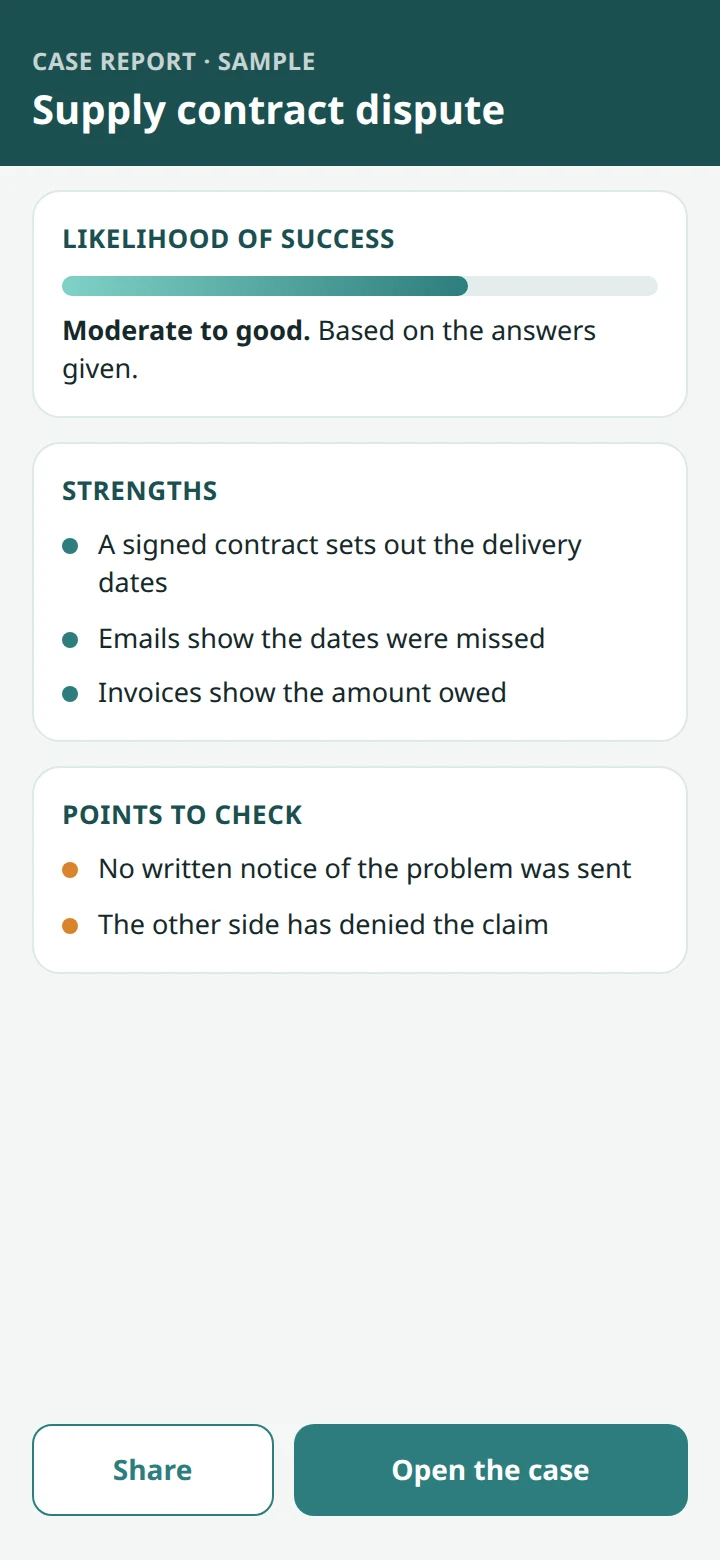
The case reportStrengths and points to check
-
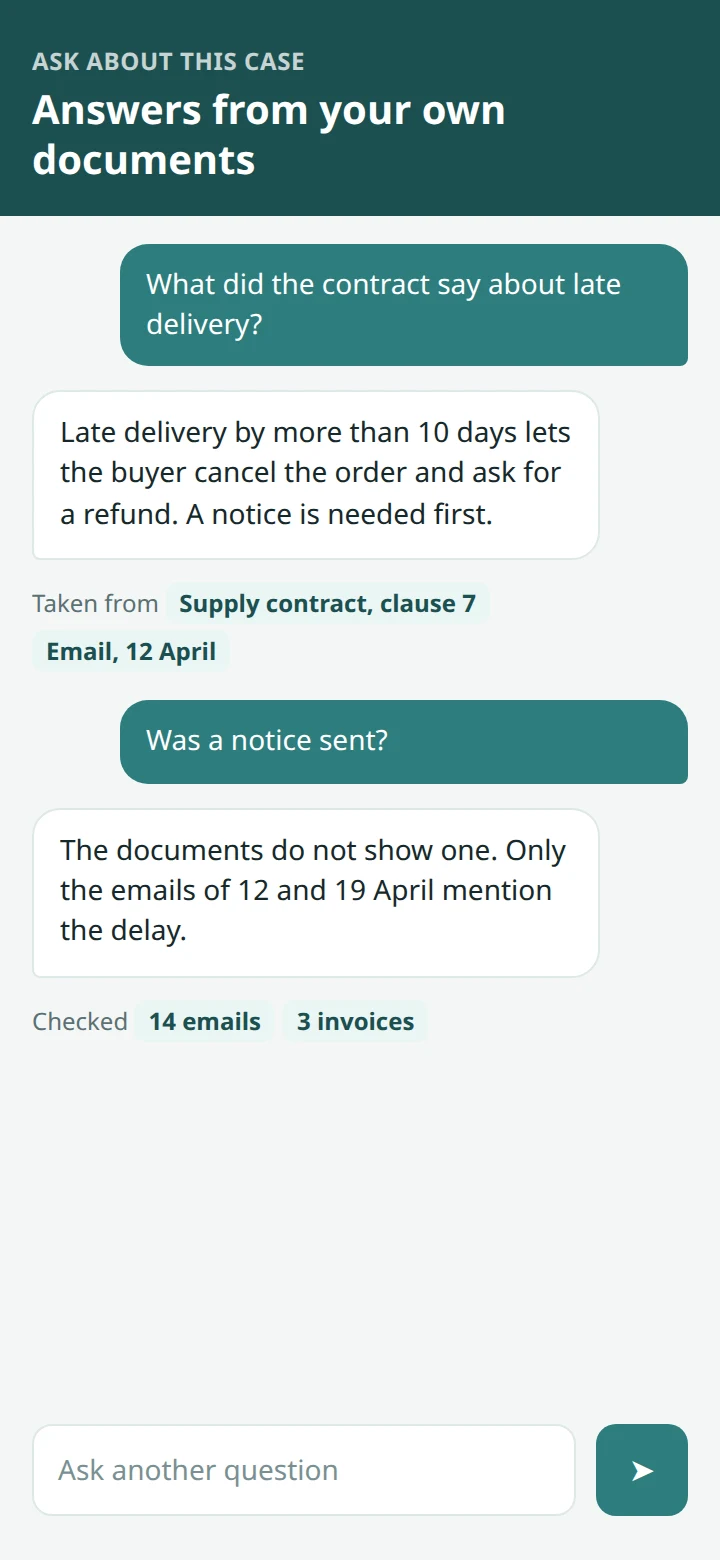
Ask about the caseAnswers from your own documents
-
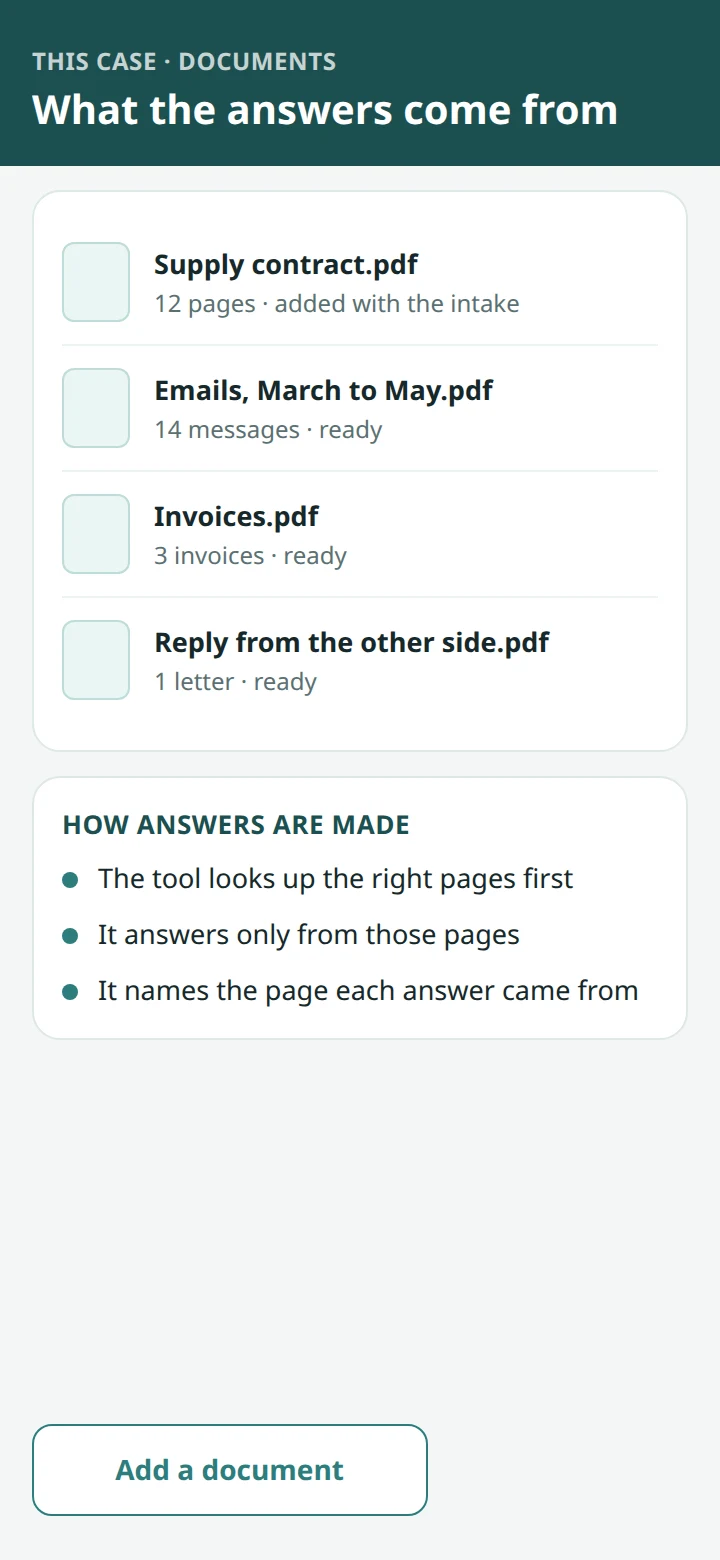
The documentsWhere each answer comes from
Running, with no major changes since the original work.
The intake, report and RAG tools run inside the client's portal. The figures below are from partnervine.com, October 2026.
- 3
- AI-assisted tools: intake questions, case report and RAG answers
- 3
- legal regions: Switzerland, the UK and the US
- 4
- currencies: USD, EUR, GBP and CHF
- 24/7
- hotline
 partnervine.com (opens in a new tab)
After launch
Steady since the original work.
The team reports no major changes to the system since it was first built.
The tools are not public, so the public PartnerVine site does not show them.
Provis has delivered 200+ projects since 2012, with a team of 25+ engineers, designers, QA and project leads.
Every Provis build comes with 24/7 monitoring and support after launch.
How every Provis project runs
- One project leadyour single point of contact
- A written weekly update and a demoof what was built that week
- A staging link and your repoyou see the work as it is built; the code goes straight into your repo
- QA before launchour QA team tests every feature
- Yours from day onecode repo, cloud account and domain in your company's name; our team joins as collaborators, and you can remove access at any time
- Our team works in India, on ISTUTC+5:30: 1.5 hours ahead of Dubai, 4.5 ahead of London (5.5 in winter), 9.5 ahead of New York (10.5 in winter)
Want AI to help with intake or case assessment?
Tell us how your intake works today and what you would like it to produce. We will come back within two working days with an approach, a rough timeline and a rough cost range. No charge, no commitment.
 WhatsApp us
Send us a message
indicates a required field