







How Provis is building a platform that reads US real-estate transaction documents for ViziDeal.
A property transaction document runs to about 17 or 18 pages of required fields and checkboxes, and missing one fails the client's requirement. Provis is building a platform that extracts that information. It is about 95–96% accurate today, as measured by the team, against the client's target of 100%, and it is not yet deployed.
- Document processing
- Data extraction


 Client: ViziDealReal-estate technology, United States
Close to the goal, but not there yet.
From the Provis project team. The accuracy is the team's own measure, and 100% is the client's target, not a result.
- 95–96%
- accurate today
- About 95 to 96 out of every 100 required items are read correctly, as measured by the team
- 100%
- what the client needs
- One missed item fails a document, so the platform is not in use until it reaches this
- 17–18
- pages per document
- About that many pages, with the required items spread across all of them
At a glance
- Problem
A real-estate transaction document has about 17–18 pages of required fields and checkboxes, and missing even one fails the client's requirement.
- Solution
A platform that extracts the required information from the documents, built for very high accuracy.
- Status
In progress, not yet deployed. About 95–96% accurate today, as measured by the team, against the client's 100% target.
- Client
- ViziDeal
- Industry
- Real-estate technology: document processing
- Market
- United States
- Services
- Document processing platform, extraction of structured information
- Status
- In progress, not yet deployed
- Accuracy
- About 95–96% now, as measured by the team; the client's target is 100%
One missed checkbox fails the whole document.
ViziDeal works on US real-estate transactions. A property transaction document is about 17 or 18 pages long, and it holds important fields and checkboxes that must all be captured.
The client's requirement is strict. If the system misses even one required field or checkbox, the result fails. That is why the target is 100% accuracy, and why the platform is not deployed until it gets there.
How a transaction document is usually checked by hand
- A document arrivesa long file of 17 or 18 pages
- A person reads itpage by page, looking for each field
- Boxes are ticked offone missed checkbox is easy to overlook
- A second checkslow, and still not certain
A typical flow for businesses like this, not a record of this client.
Extract every required item, and measure against 100%.
The two problems in this project, and where Provis stands on each.
-
Required information is spread across a long document
A transaction document is about 17–18 pages, and the required fields and checkboxes sit throughout it, and all of them must be captured.
What Provis builtA platform that extracts the required informationProvis built a platform for processing real-estate documents. It extracts the required information from the transaction documents as structured data.
-
The bar is 100%, because one miss fails the document
Missing a single required field or checkbox means the result fails the client's requirements, so very high accuracy is the whole point.
What Provis builtAccuracy work, still in progressThe team measures about 95–96% today. The client requires 100%, so the platform is not deployed yet and the work continues towards that target.
How Provis approaches a document-reading project.
- Discovery and auditStudy the documents and list every field that must be captured
- BuildCreate the extraction, and check its results against the documents
- Test and launchMeasure accuracy on real documents, and go live only when it meets the bar
- SupportKeep watching results after launch and fix what the checks find
-
Discovery: a list of the fields and checkboxes the client must capture.
-
Build: extraction that turns each document into structured data.
-
Testing: accuracy measured on real documents before anything goes live.


How Provis runs a project like this:
Measure first, launch when it meets the bar.
This is Provis's usual way of working, not a list of what was done for this client. Where one miss is costly, the launch waits for the accuracy to be proven.
A written update every week, and a QA check before launch.
How Provis builds AI into a productWhat reading a document looks like.
Illustrative screens, designed in ViziDeal's style; the real platform is not live and is private. Everything shown is made up, including every name, address and number. Select one to enlarge it.
-
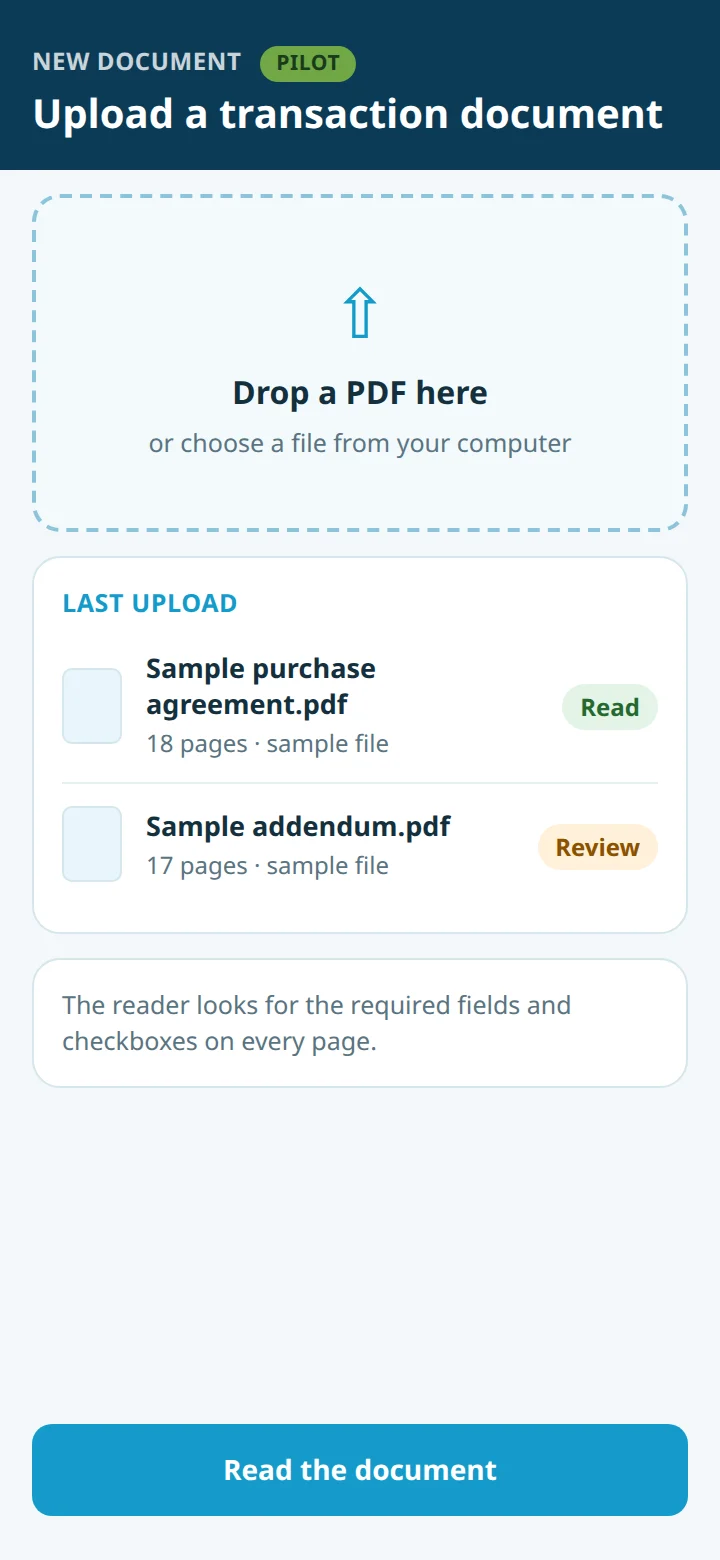
Upload a documentMarked as a pilot
-
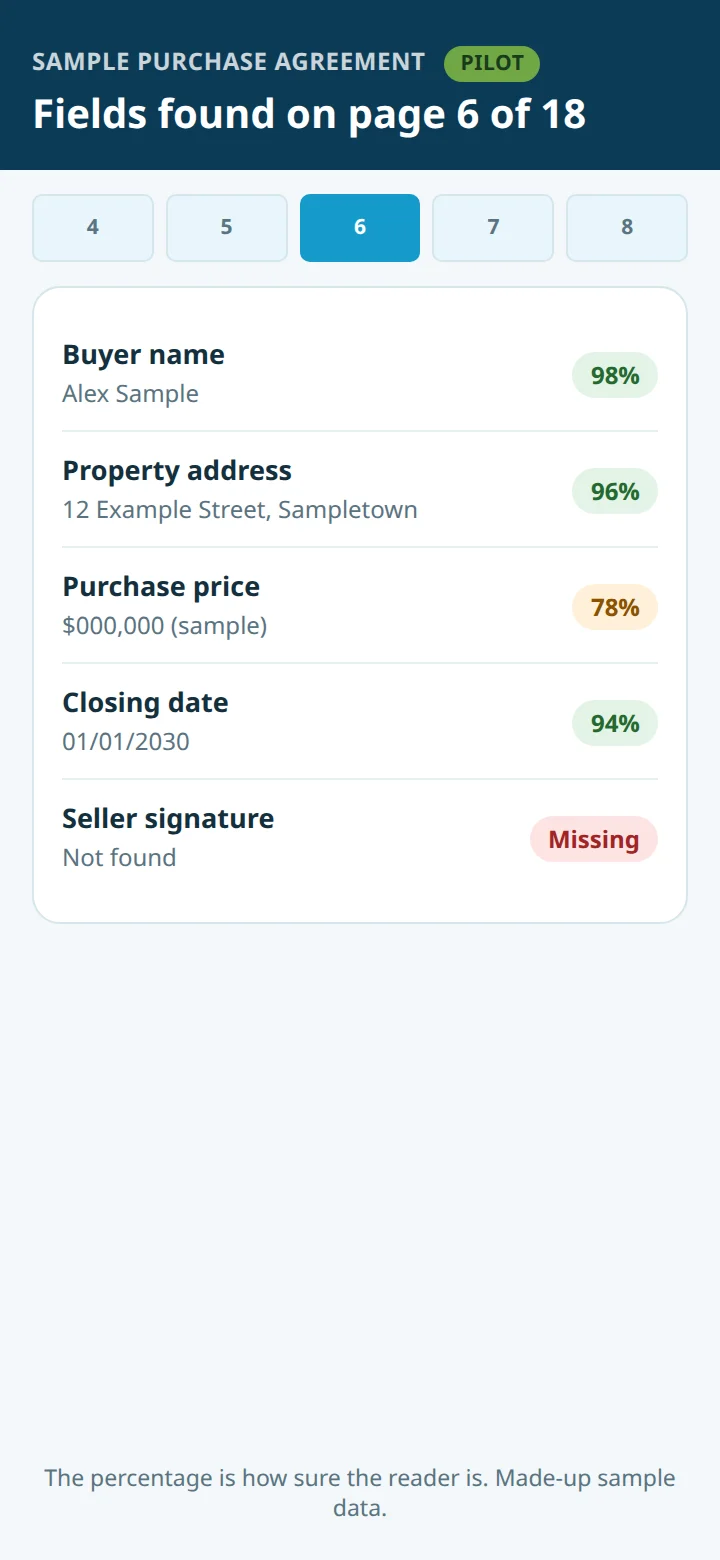
Fields, page by pageWith how sure the reader is
-
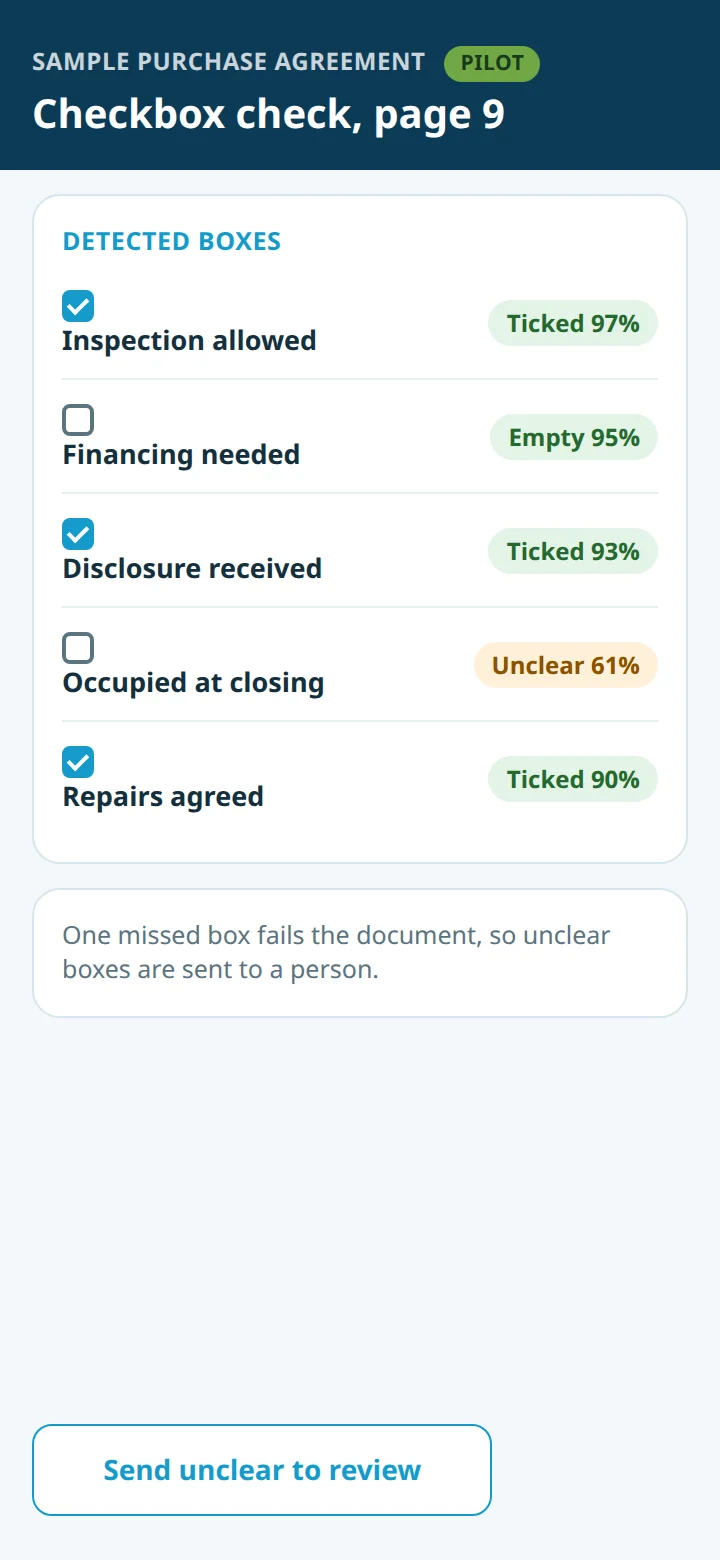
Check the boxesUnclear ones go to a person
-
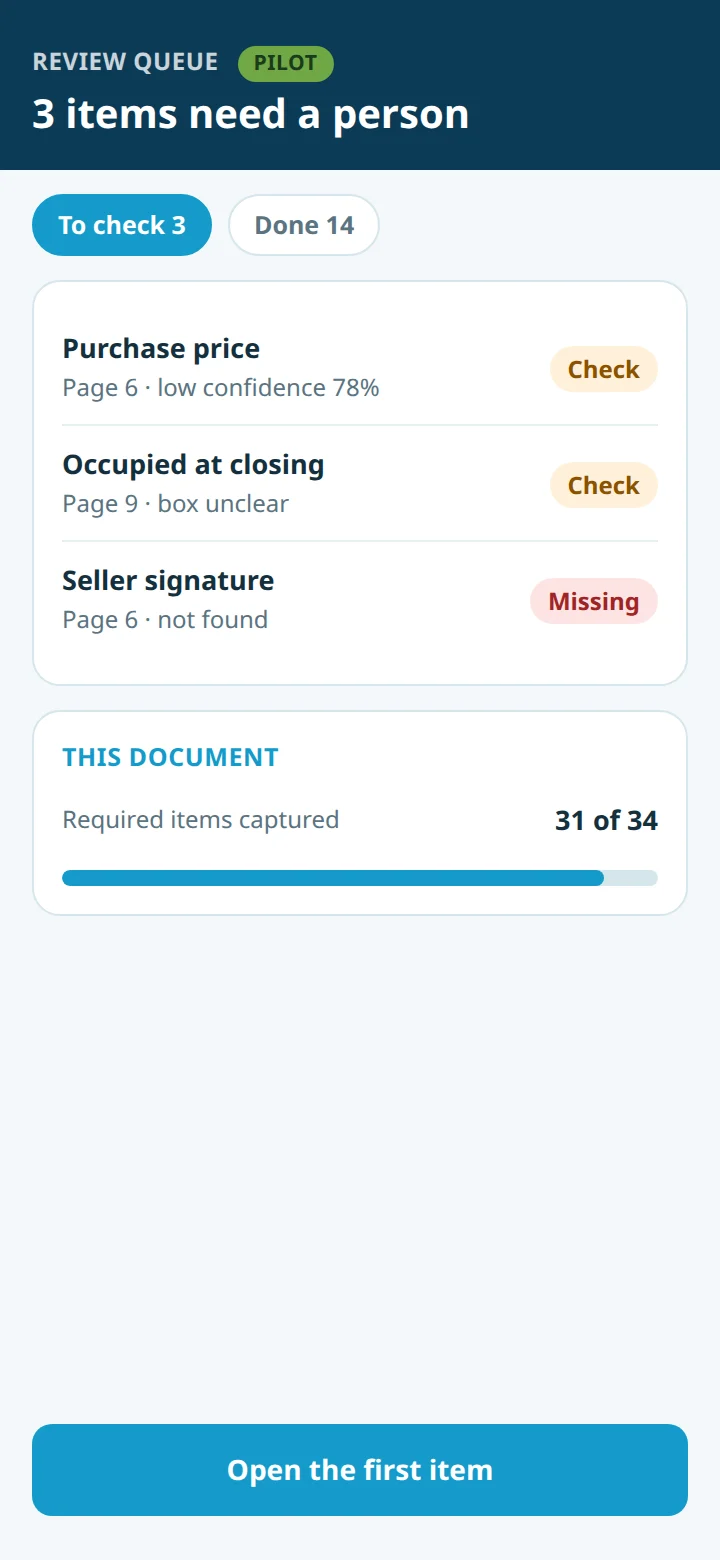
The review queueA person checks the doubtful items
-
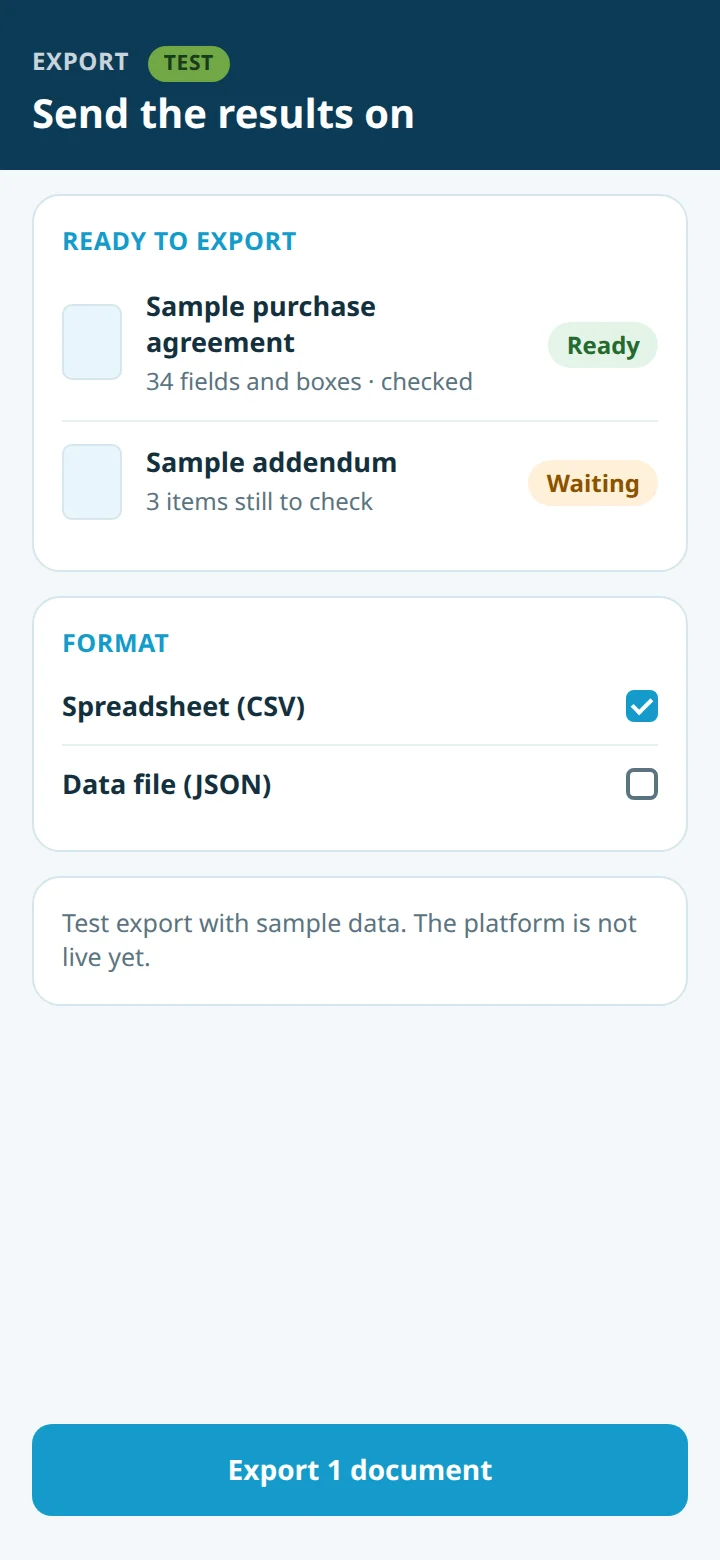
Export the resultsTest export, sample data
In progress, and not yet deployed.
The platform has not met the client's accuracy requirement, so it is not in use yet.
Current status
Not live yet.
Current accuracy is about 95–96%, as measured by the team. The client's target is 100%.
The platform will be deployed once it meets that requirement.
Provis has delivered 200+ projects since 2012, with a team of 25+ engineers, designers, QA and project leads.
Every Provis build comes with 24/7 monitoring and support after launch.
How every Provis project runs
- One project leadyour single point of contact
- A written weekly update and a demoof what was built that week
- A staging link and your repoyou see the work as it is built; the code goes straight into your repo
- QA before launchour QA team tests every feature
- Yours from day onecode repo, cloud account and domain in your company's name; our team joins as collaborators, and you can remove access at any time
- Our team works in India, on ISTUTC+5:30: 1.5 hours ahead of Dubai, 4.5 ahead of London (5.5 in winter), 9.5 ahead of New York (10.5 in winter)
Need to pull exact data out of documents?
Tell us what your documents look like and how accurate the extraction has to be. We will come back within two working days with an approach, a rough timeline and a rough cost range. No charge, no commitment.
 WhatsApp us
Send us a message
indicates a required field