





Know What Your Customers Complain About Most
Our sentiment analysis reads every review and piece of feedback, groups what customers say by topic and shows the quotes behind each finding.
 WhatsApp


Why your reviews are not telling you much yet
Your customers tell you what is wrong in reviews, surveys and support messages. There are too many to read, so the team skims a few and looks at the star rating, and the pattern behind the complaints stays hidden.
-
“We have more reviews than anyone has time to read.”

Every review is read and tagged by topic, so the report covers everything customers have written.
-
“The star rating dropped, and we do not know why.”

Each review is split into topics, such as delivery, price or quality, so you see which one moved.
-
“Feedback sits in reviews, surveys and tickets, all apart.”

Reviews, survey answers and support messages are read together, in one report.

Every complaint and compliment, sorted by topic
Sentiment analysis works out how a customer feels about each thing they mention. It helps when customers write more than your team can read, and each analysis starts as a pilot on your own reviews.
-
Complaints and praise by topic
Every review split into the topics it mentions, each marked positive, negative or mixed, with the quotes behind it.
-
Customer feedback analysis
Survey answers, support messages and feedback forms read together, so one complaint shows up once across them all.
-
Product and store reviews
Reviews on your store, marketplaces and app stores, grouped by product, so you see which one draws the complaints.
-
Alerts when a complaint grows
A message to the right person when a topic, such as late delivery, turns more negative than usual.
-
Competitor review comparison
Public reviews of competing products read the same way, so you see where customers rate you better or worse.
Need customers' questions answered as they come in? See AI customer support automation
A report your team reads, with the quotes behind it
You get a system that reads your reviews and feedback as they arrive, with a topic list you sign off. Your team gets a report to read and the checks that show the tags are right.
-

A system for every source
Reviews, surveys and tickets collected and read as they arrive.
-

A topic list you sign off
The topics that matter to your business, in your words.
-

A report your team reads
Topics, feeling and the trend over time, with the quotes behind each.
-

A checked sample
Reviews tagged by your team and by the model, compared before launch and after any change.
-

Data rules
Names, emails and phone numbers removed before any text reaches the model.
-

Instructions and a handover for your team
The code in your own code repository, the documentation and a walkthrough.
Pilot-first
What a first review analysis pilot builds
Pilot-first: we start with a small pilot on your own data, priced up front, before any full build. The pilot takes an export of your reviews or feedback and tags it by topic and feeling. Your team checks a sample of the tags before anything goes further.
- What the pilot builds
- Your reviews tagged by the topics you sign off and by feeling, with the quotes behind each topic, from a one-off export.
- What you get
- A report of what customers complain about most, how the model's tags compared with your team's, and a plain recommendation: go further, change course or stop.
How sentiment and review analysis works
Sentiment analysis reads a piece of text, such as a review, and works out how the writer feels about what they mention. Review analysis goes one step further. It splits each review into topics, such as delivery or price, marks the feeling for each, and adds them up across every review so the patterns show.
-
Collect
Reviews, surveys and tickets come in from each source.
-
Clean
Duplicates and personal details, such as names and emails, are removed.
-
Tag
A model marks each topic a review mentions, and the feeling for each.
-
Your report
Tags are added up by topic, product and week, with the quotes kept.
-
Act
The right person sees what changed, and why.
- Collect “Lovely jacket, but it took weeks to arrive and nobody replied to my email.”
- Clean No name, email or phone number in the text, so nothing to remove.
-
Tag
Product quality, marked positive. -
Tag
Delivery time, marked negative. -
Tag
Reply from support, marked negative. - Your report Added to this week's delivery and support topics, with the quote kept.
- Act Delivery complaints are up this week, so the operations lead gets an alert.
Your team can open any topic and read the reviews behind it, so no finding has to be taken on trust.
Built on the reviews and surveys you already collect
We build review analysis on the data you already have and show you the quotes behind every finding. We stay on after launch.
 View our work
-
We ship live AI products
Gyanee.ai, which we built, and our own Chitra and ProvisCommerce are live on the App Store, Google Play and the web.
-
Built around your systems
We read the store reviews, surveys and helpdesk you already run, and send the report to the tools your team already reads.
-
Support after launch
We monitor the analysis after launch, keep it updated and recheck its tags against your team's.
-
Hours that overlap yours
We work on India Standard Time (IST): 4.5 to 5.5 hours ahead of London and 9.5 to 10.5 ahead of New York.
Tags checked against your team, personal details kept out
A report is only useful if you can trust it. On every analysis we build, we check the model's tags against your team's, keep personal details out and show the quotes behind every finding.
On every analysis we build
- A sample tagged by your team, compared with the model before launch and after any change.
- Names, emails and phone numbers removed before any text reaches the model.
- Every finding links to the reviews behind it.
- Only sources you have the right to use, read from your own accounts.
One review source proved before we add the next
We start with one source of reviews and prove the tags on a sample your team checks. We add sources once the first report has proved useful.

The models and tools we build review analysis with
Standard, widely used tools, so another team could take the code over. We choose the model per task, on accuracy, cost and where your data is allowed to go, and keep the results next to the systems you already run.
-
Models
OpenAI and Anthropic Claude, and open models on Ollama when reviews have to stay on your servers.
-
 Anthropic Claude
-
 OpenAI
-
 Ollama
-
-
System
Python, with the tagged reviews stored in PostgreSQL.
- Python
-
 PostgreSQL
-
Sources
Your store, marketplace and app store reviews, survey tools and helpdesk, through exports or a direct connection where the tool offers one.
-
Reports
A dashboard or a regular email, in the tools your team already reads.
Provis Technologies AI Integration services are phenomenal. We have been witnessing growth after the AI automation they have put into our business.

Send us the reviews nobody has had time to read.
Tell us where your reviews and feedback live and what you want to learn from them. We will show you what a first pilot would find, and how your team would check it.



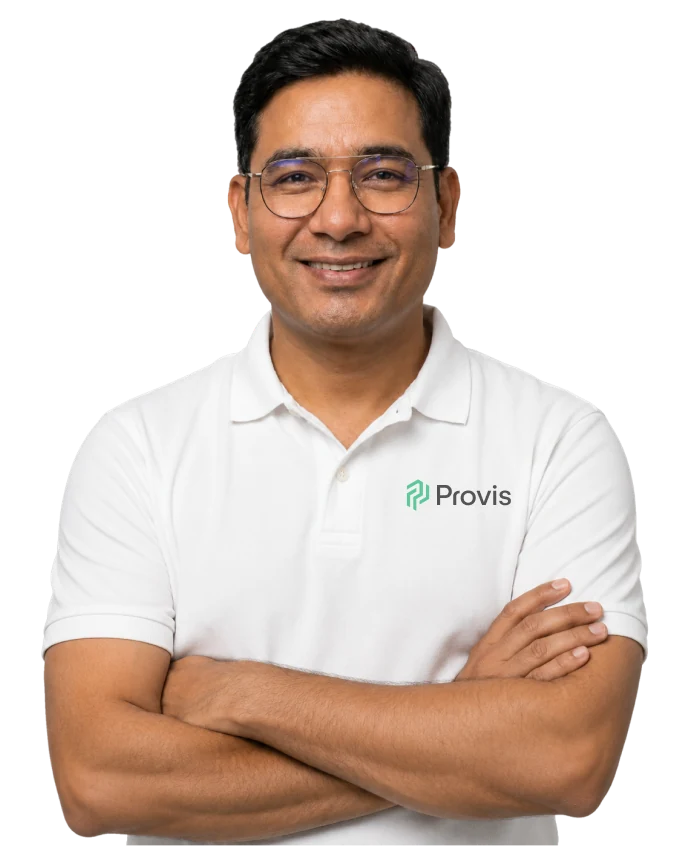
Vivek SharmaCEO & Founder, Provis Technologies
Questions about sentiment and review analysis
What are sentiment analysis services?

We build software that reads your customers' reviews and feedback and works out how they feel about each thing they mention, such as delivery or price. You get a report of what customers praise and complain about most, with the quotes behind each finding, instead of a star rating on its own.
How is review analysis different from a star rating?
A star rating tells you how happy a customer was overall. Review analysis tells you why. One review can praise the product and complain about delivery. Splitting reviews into topics shows which part of your business moves the rating, and which complaint is growing.
What is review mining?
Review mining means reading a large number of reviews to find the topics, complaints and requests that repeat. We do it with a large language model (LLM), the kind of AI behind ChatGPT and Claude, that tags each review by the topics you sign off, so the findings use your words and can be checked against the reviews behind them.
Which sources can you analyse?
Reviews on your store, marketplaces and app stores, survey answers, feedback forms and support tickets. We collect each source through an export or a direct connection, and only sources you have the right to use. The pilot starts with one source, usually the one with the most reviews.
How accurate is it?
We measure it on your data rather than quote a figure. Before launch your team tags a sample of reviews, and we compare the model's tags with theirs. We rerun that check after any change, so you know how far to trust each topic before you act on it.
Can it read reviews in other languages?
Yes. Current language models read many languages, and the report can be in one. We include reviews in each language you receive in the pilot's checked sample, so you see how well each one is tagged before you rely on it.
Can it analyse customer feedback from surveys and tickets too?
Yes. Survey answers, feedback forms and support messages are read the same way as reviews and reported together, so one complaint shows up once across all of them, and you can see where each one came from.
Is our customers' data safe?
Names, emails and phone numbers are removed before any text reaches the model. With hosted models from OpenAI or Anthropic, the text is processed by that provider. With open models on your own servers, it stays inside your network.
How is this different from AI customer support automation?
Support automation answers customers one ticket at a time. Sentiment and review analysis reads what they say across all reviews and feedback afterwards, and tells you what to fix. The two work together: support tickets can be one of the sources the analysis reads.
Why start with a pilot?
Because the topics and the accuracy have to fit your own business. The pilot tags a one-off export of your reviews, your team checks a sample, and you see the report before anything is built to run live.
How much does sentiment analysis cost?
Three things drive the cost: the number of sources, how often new reviews are read, and the report or alerts you want. Tell us where your reviews and feedback live, and within two working days we come back with an approach, a rough timeline and a rough number.
How long does it take?
It depends on the sources and the report you want. We start with a pilot on one source, so your team sees the first report before we build more. We agree the timeline at the discovery call.
Who owns the code and the results?
You do. Your code repository, cloud account and domain are in your company's name, and the tagged reviews stay in your own database. Our team joins as collaborators, and you can remove access at any time.
Do you work with UK and US clients from India?
Yes. We sign an NDA before we start, on request, and work only in the accounts you invite us into. The code repository, cloud account and domain stay in your company's name.

Work with experts
Built for teams that want to know why customers complain
We build sentiment and review analysis that shows what customers complain about, with the quotes behind it.
Prefer to talk directly?
-
 Emailsales@provistechnologies.com
-
 WhatsApp+91 88755 82124
-
 UK phone+44 7862 126522
-
 Video callBook 30 minutes with Vivek Sharma
We're on IST: 4.5 to 5.5 hours ahead of London, 9.5 to 10.5 ahead of New York.
-
1
 Your reviews
-
2
Your details
-
3
Additional info
Tell us where your reviews and feedback live
Describe your sources of reviews and feedback, roughly how much you receive, and what you want to learn from it.
Prefer to talk directly?
-
Emailsales@provistechnologies.com
-
WhatsApp+91 88755 82124
-
UK phone+44 7862 126522
-
Video callBook 30 minutes with Vivek Sharma
We're on IST: 4.5 to 5.5 hours ahead of London, 9.5 to 10.5 ahead of New York.