





An AI Assistant That Knows Your Documents
Our RAG development builds assistants that answer your team's questions from your own contracts, policies and manuals. The AI finds the right passages first and answers only from them.
 WhatsApp


Why your team still cannot find answers in its own documents
The answer is written down somewhere: a contract, a policy, a manual, an old email. Finding it means knowing where to look, and a general chatbot does not know your documents at all.
-
“The answer is in a document, but nobody knows which one.”

The assistant searches all of them and answers in plain English.
-
“A general chatbot makes things up about our business.”

Answers rest on what your documents say, not on what the model guesses.
-
“Our documents are confidential.”

With an AI model that runs on your own servers (an open model), nothing leaves your network.

Where your documents already hold the answer
Build one where people keep asking questions your documents already answer. These are the assistants we build, and where we have done it.
-
Answers from product and order records
Drafts answers from your order and product records about stock and delivery, and hands off to a person when the records cannot answer.
-
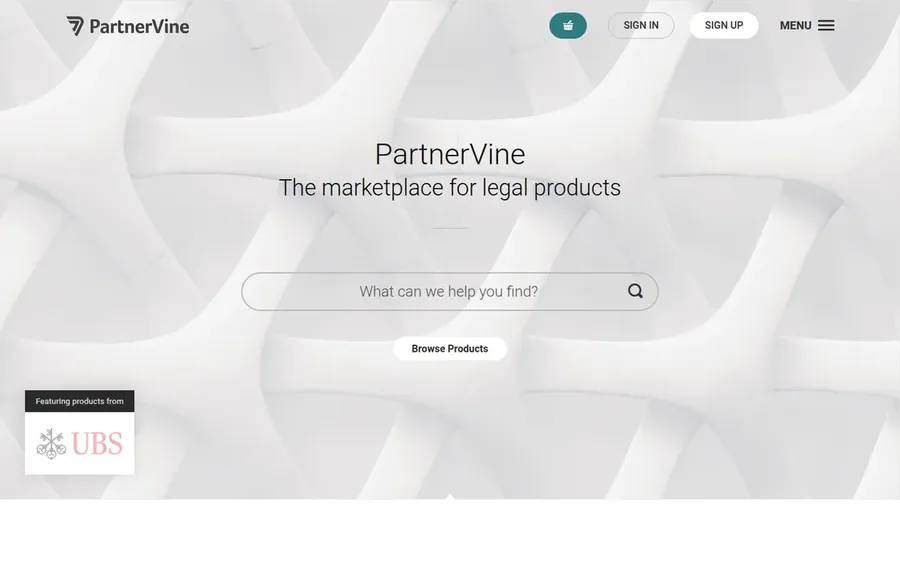
Questions about a legal case
Answers questions about a legal case using only the client's own data. It sits next to an intake questionnaire and a case report built from the same answers.
PartnerVine RAG system -
Policies and handbooks for your staff
HR, finance and operations questions, answered from the policies you have already written.
-
Product manuals for sales and service
Specifications, setup steps and fixes, answered from your manuals and help articles.
-
Contracts and agreements
Notice periods, renewal terms and obligations, found across all your contracts.
Answering customer tickets instead? See AI customer support automation
Your documents, searchable and kept current as they change
You get the assistant on your documents, an update process that keeps it current, tests that show it answers correctly, and the handover your team needs to run it.
-

The assistant
In the portal, app or chat tool your team already uses.
-

A document pipeline
Your files made searchable and kept up to date as they change.
-

Access by role
Each person gets answers only from the documents they may see.
-

A hand-off
When the documents do not hold the answer, it says so and points to a person.
-

A test set of real questions
Real questions with the answers you expect, rerun after any change.
-

Instructions and a handover for your team
The code in your own code repository, the documentation and a walkthrough.
In production
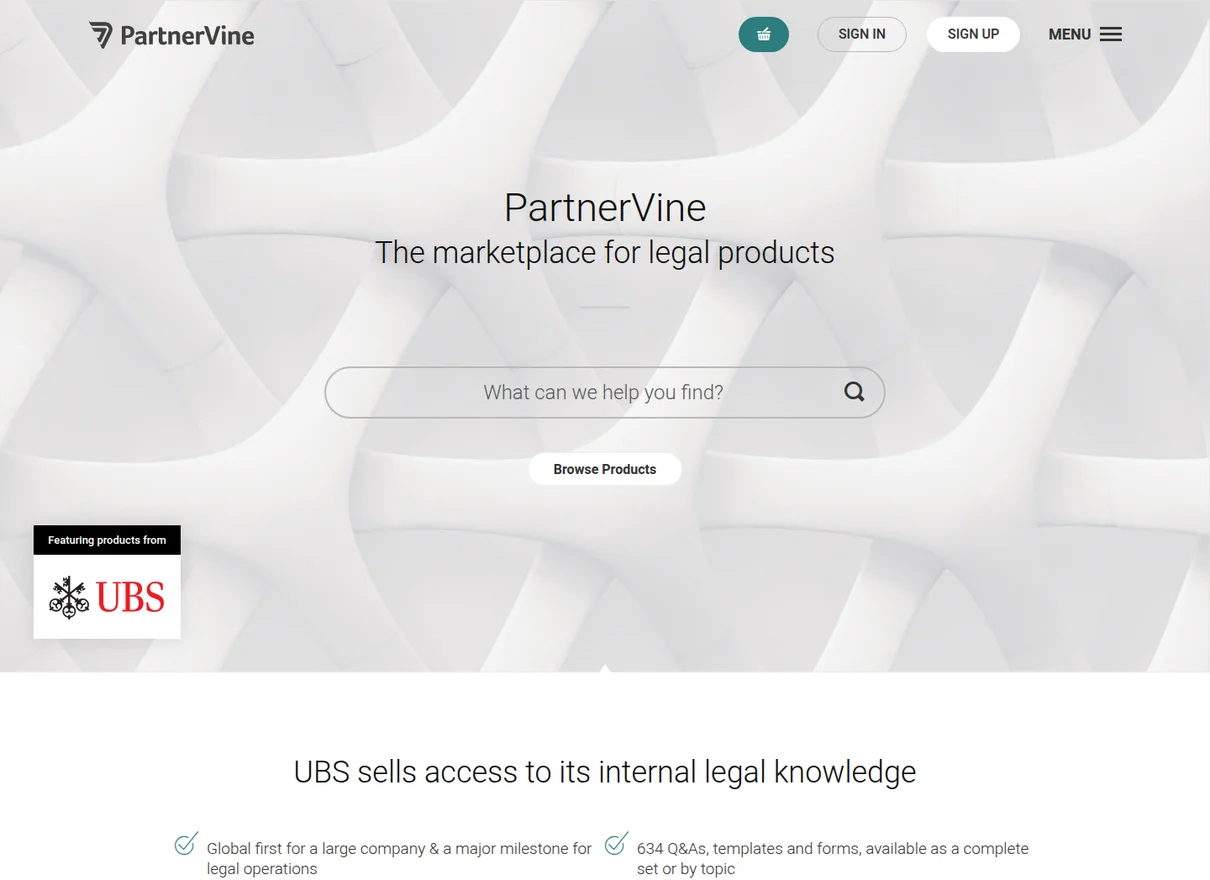
PartnerVine: answers drawn only from a legal client's own data
PartnerVine is a legal technology client. Provis built an intake questionnaire, a case report generated from the answers, and a RAG system that answers questions using only the client's own data. It runs inside the client's portal, with no major changes since the original work.
- Built
- A RAG system that looks up the relevant information in the client's data first, then answers from it. The case report uses the same intake answers.
- Why it matters
- Answers about a case are only useful if they come from what the client has actually provided.

How a RAG assistant works
RAG, retrieval-augmented generation, makes a language model answer from your documents. The assistant first looks up the passages in your documents that relate to the question, then gives only those to the model, which writes the answer from them. If nothing relevant is found, it says so.
-
Question
A person asks in plain English, where they already work.
-
Retrieval
It finds the passages in your documents that relate to the question.
-
Model
The model gets the question and those passages only.
-
Second check
The answer is checked against what was found.
-
Answer
The person gets an answer that rests on your documents.
- Question “How much notice do we have to give the supplier?”
-
Retrieval
Checks access: only the contracts this person may read -
Retrieval
Searches those contracts for supplier notice: the passages that mention it - Model The model gets the question and those passages, nothing else.
- Second check The answer is checked against the passages it came from.
- Answer “Sample answer: three months' written notice before the term ends, under the supply contract's termination clause.”
Had no contract mentioned notice, the assistant would have said so and pointed to your legal team, instead of guessing.
A legal client already gets answers only from its own data
We built PartnerVine's RAG system on the data the client already held, answering only from it. We build yours the same way, and stay on after launch.
 View our work
-
A RAG system in production
PartnerVine's RAG system answers questions using only the client's own data, inside its portal.
-
Built around your systems
We connect the assistant to the documents, folders and records you already keep, instead of replacing them.
-
Support after launch
We monitor the assistant after launch, keep its index current as your documents change, and improve it as new models arrive.
-
Hours that overlap yours
We work on India Standard Time (IST): 4.5 to 5.5 hours ahead of London and 9.5 to 10.5 ahead of New York.
Each person gets answers only from files they may see
An assistant is only useful if people can trust its answers and its access. We decide with you which documents it reads and who may ask, and we test the answers before launch.
On every RAG assistant we build
- Answers come only from the passages found; when nothing relevant is found, it says so.
- Each person gets answers only from the documents their role may see.
- A test set of real questions runs before launch and after every change.
- A log of questions and answers, so your team can see what people ask.
A sample of your documents first, then all the rest
We start with the questions your team asks most and the documents that answer them. We prove the assistant on a sample, then add the rest.
The models and tools we build RAG assistants with
Standard, widely used tools, so another team could take the code over. We choose the model and the search store for your documents and your rules on data, and build in your own cloud with the tools below.
-
Models
OpenAI and Anthropic Claude, and open models on Ollama when documents must stay on your servers.
-
 OpenAI
-
 Anthropic Claude
-
 Ollama
-
-
Search over documents
Your documents stored in a searchable form (embeddings), in a vector database such as Qdrant, or in pgvector alongside PostgreSQL.
- Qdrant
-
 PostgreSQL
- pgvector
-
Backend
Python and FastAPI, with LangChain and LangGraph.
- Python
- FastAPI
- LangChain
-
Hosting
Your own cloud account, such as AWS, in your company's name.
- AWS
-
Your documents
PDFs, Word files, emails, help articles and the records in your database.
Provis Technologies AI Integration services are phenomenal. We have been witnessing growth after the AI automation they have put into our business.

Send us the questions your team keeps asking.
Tell us the questions your team asks and where the answers are written down. We will show you how we would build the assistant, and what it should never read.



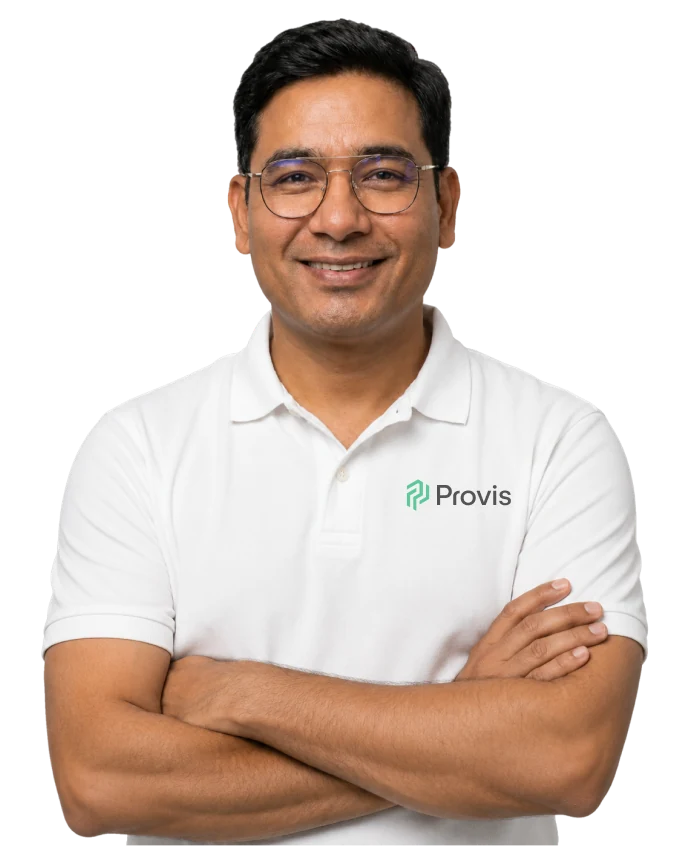
Vivek SharmaCEO & Founder, Provis Technologies
Questions about RAG development
What is RAG?

RAG, retrieval-augmented generation, makes a language model answer from your documents instead of from memory. The assistant first finds the passages that relate to the question, then the model writes the answer from those passages only. When nothing relevant is found, a well-built assistant says so instead of guessing.
How is a RAG chatbot different from ChatGPT?
A RAG chatbot answers from your own documents. A general chatbot answers from what its model learned in training, which knows nothing about your contracts or policies. The RAG chatbot looks things up in your files each time, so its answers change when your documents do.
Which documents can it read?
PDFs, Word files, emails, help articles and the records in your database, as long as the text can be read. We agree with you which folders and systems are in, and which stay out, before we make anything searchable.
Can it show where each answer came from?
It can. Under each answer we can show the document and the passage it came from, so your team can check it. Whether to show sources, and how, is a choice we make with you when we design the assistant.
How do you stop it making things up?
The model gets only the passages retrieval found and is told to answer from them alone. A second check compares the answer with those passages, and when the documents do not hold the answer, the assistant says so. A test set of real questions is rerun after every change.
Is our data kept private?
Where your data goes is your choice. With hosted models from OpenAI or Anthropic, it is processed by that provider. With open models we run on your own servers or cloud through Ollama, documents and prompts stay inside your network. We work only in the accounts you invite us into.
Can different people see different documents?
Yes. Each person signs in, and the assistant searches only the documents their role may see, so an answer never draws on a file that person could not open themselves.
What happens when our documents change?
The document pipeline picks up new and changed files and updates the search index, so answers follow your latest version. We agree with you how often it runs, and which folders it watches.
RAG or fine-tuning: which do we need?
Usually RAG. It answers from your documents as they are today, changes when they change, and you can see where an answer came from. Fine-tuning trains a model on examples to change how it writes or behaves; it does not keep facts current. Some projects use both.
Is this the same as a customer support chatbot?
Not quite. This service covers assistants that answer from your internal knowledge and documents, mostly for your own team. Answering customer tickets across email, chat and WhatsApp is support automation, a separate service, though it often uses the same retrieval underneath.
How much does RAG development cost?
Three things drive the cost: how many documents and systems the assistant reads, who uses it and with what access, and how much testing the answers need. Tell us what your team asks, and within two working days we come back with an approach, a rough timeline and a rough number.
How long does it take to build?
It depends on the documents and the systems they live in. We start with a pilot on a sample of your documents, so your team asks real questions before we add the rest. We agree the timeline at the discovery call.
Who owns the code and the index?
You do. The code goes straight into your own code repository, and the cloud account that holds the search index is in your company's name. Our team joins as collaborators, and you can remove our access at any time.
Do you work with UK and US clients from India?
Yes. We sign an NDA before we start, on request, and work only in the accounts you invite us into. The code repository, cloud account and domain stay in your company's name, and you can remove our access at any time.

Work with experts
Built for teams that want answers from their own documents
We build RAG assistants that answer your team's questions from your own documents, and say so when the answer is not there.
Prefer to talk directly?
-
 Emailsales@provistechnologies.com
-
 WhatsApp+91 88755 82124
-
 UK phone+44 7862 126522
-
 Video callBook 30 minutes with Vivek Sharma
We're on IST: 4.5 to 5.5 hours ahead of London, 9.5 to 10.5 ahead of New York.
-
1
 The assistant
-
2
Your details
-
3
Additional info
Tell us what your team needs answered
Describe the questions people ask, where the answers are written down, and who may see what.
Prefer to talk directly?
-
Emailsales@provistechnologies.com
-
WhatsApp+91 88755 82124
-
UK phone+44 7862 126522
-
Video callBook 30 minutes with Vivek Sharma
We're on IST: 4.5 to 5.5 hours ahead of London, 9.5 to 10.5 ahead of New York.